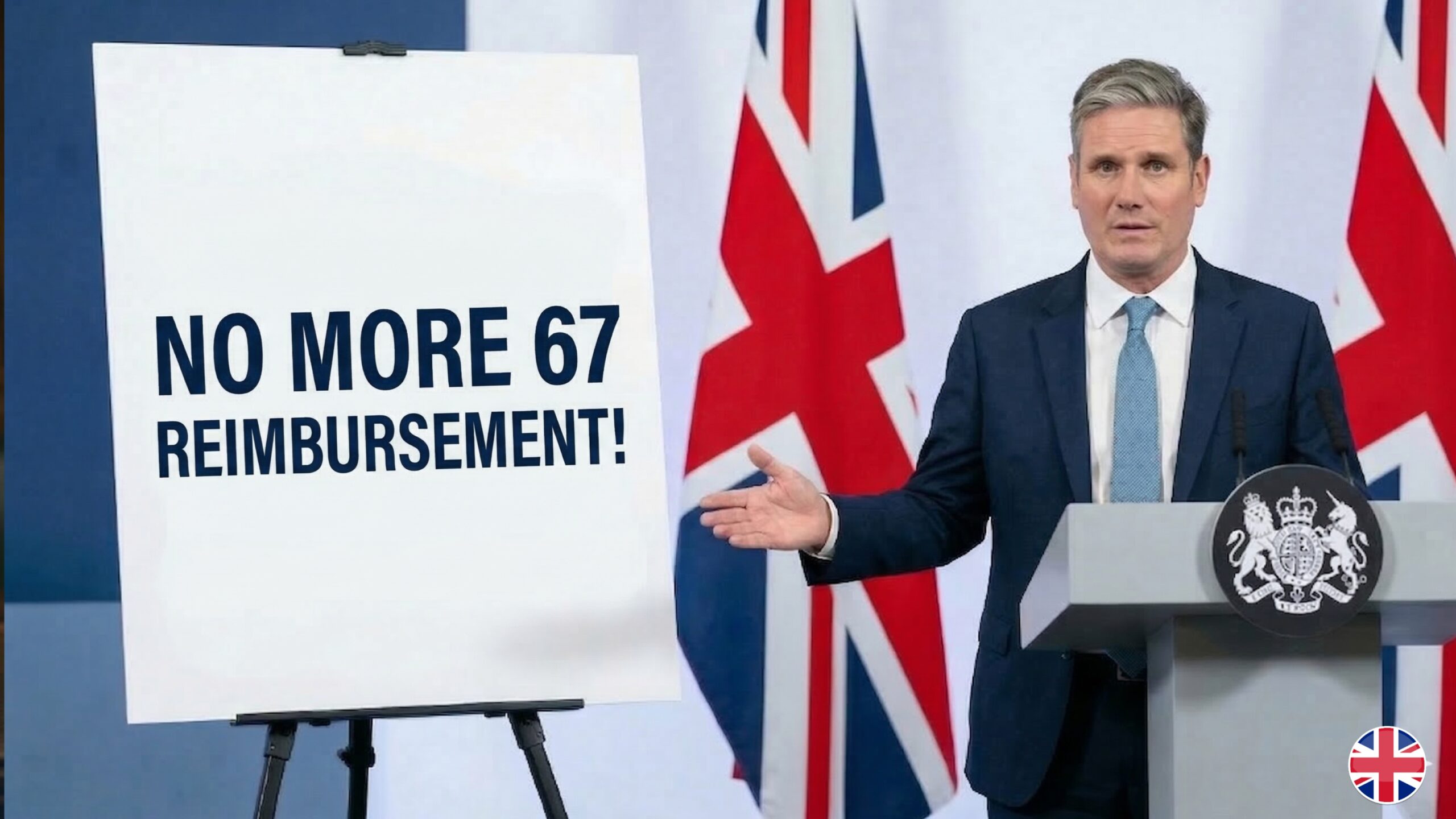
The landscape of retirement in the United Kingdom is undergoing one of its most significant shifts in decades. For years, the age of 67 was seen as the definitive finish line for the working population, a target date to circle on the calendar. However, recent government approvals and legislative reviews have signaled that this era is coming to a close. As of 2026, the Department for Work and Pensions (DWP) has solidified the transition that will eventually move the goalposts once again.
This change isn’t just about a number on a document; it affects the financial planning, health expectations, and lifestyle choices of millions of British workers. Understanding the nuances of the “Goodbye to 67” movement is essential for anyone currently in the workforce, especially those born in the 1960s and 70s who find themselves at the forefront of these adjustments.
The 2026 Transition Period
As we move through 2026, the first major phase of the new pension strategy is officially in motion. For those who were expecting to retire at 66, the window is rapidly closing. The government has confirmed that between April 2026 and April 2028, the State Pension age will rise incrementally to 67. This means that if you were born between 6 April 1960 and 5 March 1961, your retirement date is now a moving target, calculated in months beyond your 66th birthday.
By the time we reach 2028, the age of 67 will be the absolute minimum for everyone in the UK. This two-year rollout is designed to mitigate the shock to the economy, but for individuals, it means an extra year of National Insurance contributions and a delay in accessing the “Triple Lock” protected payments that many rely on to cover basic living costs.
Why 67 is No Longer the Limit
The primary reason the government is moving away from 67 as a permanent fixture is sustainability. The UK has an aging population, and the ratio of workers to retirees is shrinking. According to the latest DWP reviews, the government aims for people to spend roughly one-third of their adult life in retirement. As life expectancy—despite some recent plateaus—has generally risen over the last century, the “33% rule” dictates that the pension age must follow suit.
Furthermore, the cost to the Treasury is immense. Maintaining the State Pension at age 67 is estimated to cost billions more every year as more of the “Baby Boomer” generation enters retirement. By signaling the end of the 67-era and looking toward 68 and beyond, the government is attempting to balance the books for future generations, even if it causes immediate friction for those currently nearing their mid-60s.
The Looming Rise to 68
While the headlines are currently focused on the move to 67, the “Goodbye” truly refers to the legislative groundwork being laid for the age of 68. Under current law, the State Pension age is scheduled to rise to 68 between 2044 and 2046. However, independent reviews commissioned by the government have suggested bringing this date forward to the late 2030s.
If you are currently in your late 40s or early 50s, you are the demographic most likely to be affected by this acceleration. The government’s third periodic review, launched in 2025 and continuing through 2026, is specifically examining whether the “Act Before Late” philosophy should be applied to the 68-threshold. This would mean that the age of 67 will be a relatively short-lived standard in British history.
Impact on National Insurance Records
To claim the full New State Pension in 2026, you generally need 35 qualifying years on your National Insurance record. With the retirement age increasing, the pressure to maintain a clean record for longer is mounting. Many workers are finding that they may have gaps due to career breaks, periods of self-employment, or time spent caring for family.
Because you now have to wait longer to claim your pension, these gaps become more expensive. If you reach 67 and find you only have 30 years of contributions, you face a reduced weekly payment at a time when inflation and energy costs are still volatile. Experts are urging workers to check their “State Pension Forecast” on the GOV.UK website immediately to see if they need to make voluntary “Class 3” contributions to fill any voids before they reach the new, higher age.
The Role of the Triple Lock
A key part of the 2026 pension landscape is the Triple Lock guarantee. This policy ensures that the State Pension increases by whichever is highest: 2.5%, average earnings growth, or inflation (CPI). For the 2026/27 tax year, the full New State Pension has been set at approximately £241.30 per week.
While this increase is welcomed, the delay in reaching the pension age means that many people are “losing” a year of this income—roughly £12,500—compared to those who retired at 66. This is why the government’s approval of the new age limits has been met with mixed emotions across the UK. For some, the Triple Lock is a lifeline; for others, it is a bitter pill to swallow when the eligibility date keeps retreating into the distance.
Health Inequality and Retirement
One of the most vocal criticisms of the move beyond age 67 is the disparity in “healthy life expectancy” across the UK. While someone in a more affluent part of the South East might expect to live comfortably into their 80s, workers in industrial parts of the North or Scotland often see their health decline much earlier.
For a manual labourer whose health begins to fail at 62, the jump to a 67 or 68 pension age feels like an impossible hurdle. The government has faced pressure to introduce “early access” for those in physically demanding roles or those with terminal illnesses, but as of 2026, the “one size fits all” age remains the standard. This has led to an increase in people claiming Universal Credit or disability benefits (like PIP) as a “bridge” to their eventual State Pension.
Workplace Pensions as a Buffer
With the State Pension age becoming less reliable as an early exit strategy, the importance of workplace pensions has never been higher. Since the introduction of Auto-Enrolment, millions of UK workers are building private pots. The “Goodbye to 67” trend is forcing a shift in mindset: the State Pension is increasingly seen as a safety net rather than a total retirement solution.
Most private and workplace pensions allow you to access your funds from age 55 (rising to 57 in 2028). Many people are now planning to use these private funds to retire at 60 or 63, using the State Pension simply as a “top-up” when they eventually hit 67 or 68. If you haven’t reviewed your private pension projections recently, the 2026 rules suggest you should do so to ensure your “bridge” is strong enough to cover the gap.
The Gender Pension Gap
The transition to new ages continues to highlight the gender pension gap in the UK. Historically, women have often had lower pension wealth due to time taken off for childcare or lower-paid part-time roles. The rise to 67, and eventually 68, hits this demographic particularly hard.
Campaign groups like WASPI (Women Against State Pension Inequality) have previously highlighted how rapid changes to the pension age can leave people with no time to adjust their plans. While the current 2026 changes have been legislated for some time, the message for younger women is clear: reliance on the State Pension alone is a high-risk strategy in an era where the government is constantly reviewing age limits.
Preparing for a Longer Career
The psychological impact of “Goodbye to 67” is leading to a surge in “Mid-life MOTs.” These are government-backed initiatives designed to help workers in their 40s and 50s assess their skills, health, and finances. If you are going to be working until 68, you may need to consider “retraining” or shifting to less physically demanding roles later in life.
Employers are also being encouraged to become “age-friendly.” With a shrinking pool of younger workers, the UK economy is becoming more dependent on the “over-50” workforce. Flexible working, phased retirement, and better support for menopause and age-related health issues are becoming standard requirements for UK businesses as they adapt to the 2026 retirement reality.
Checking Your Personal Eligibility
Because the transition from 66 to 67 is happening month-by-month for those born in the early 60s, it is vital to know your specific date. You can no longer assume you will get your pension on your 66th or 67th birthday.
For example, if you were born on 5 October 1960, you will reach your State Pension age at 66 years and 6 months—meaning you can claim on 5 April 2027. If you were born just a few months later, your date will be different. The DVLA and the DWP are both moving toward digital notifications, so ensuring your contact details are up to date with HMRC is the best way to ensure you receive your invitation to claim at the correct time.
Final Thoughts on the New Era
The approval of the new State Pension age signals the end of retirement as our parents knew it. The “Goodbye to 67” movement is a reflection of a changing world where 70 is the new 60, and where the state’s ability to fund a two-decade retirement for every citizen is under strain.
While the changes may feel daunting, they also provide a clear prompt to take control of your financial future. By understanding the 2026 rules, filling your National Insurance gaps, and maximizing your workplace pension, you can navigate these shifting sands. The goal is no longer just to reach the age of 67; it is to ensure that whenever you choose to stop working, you have the financial freedom to enjoy the years ahead.