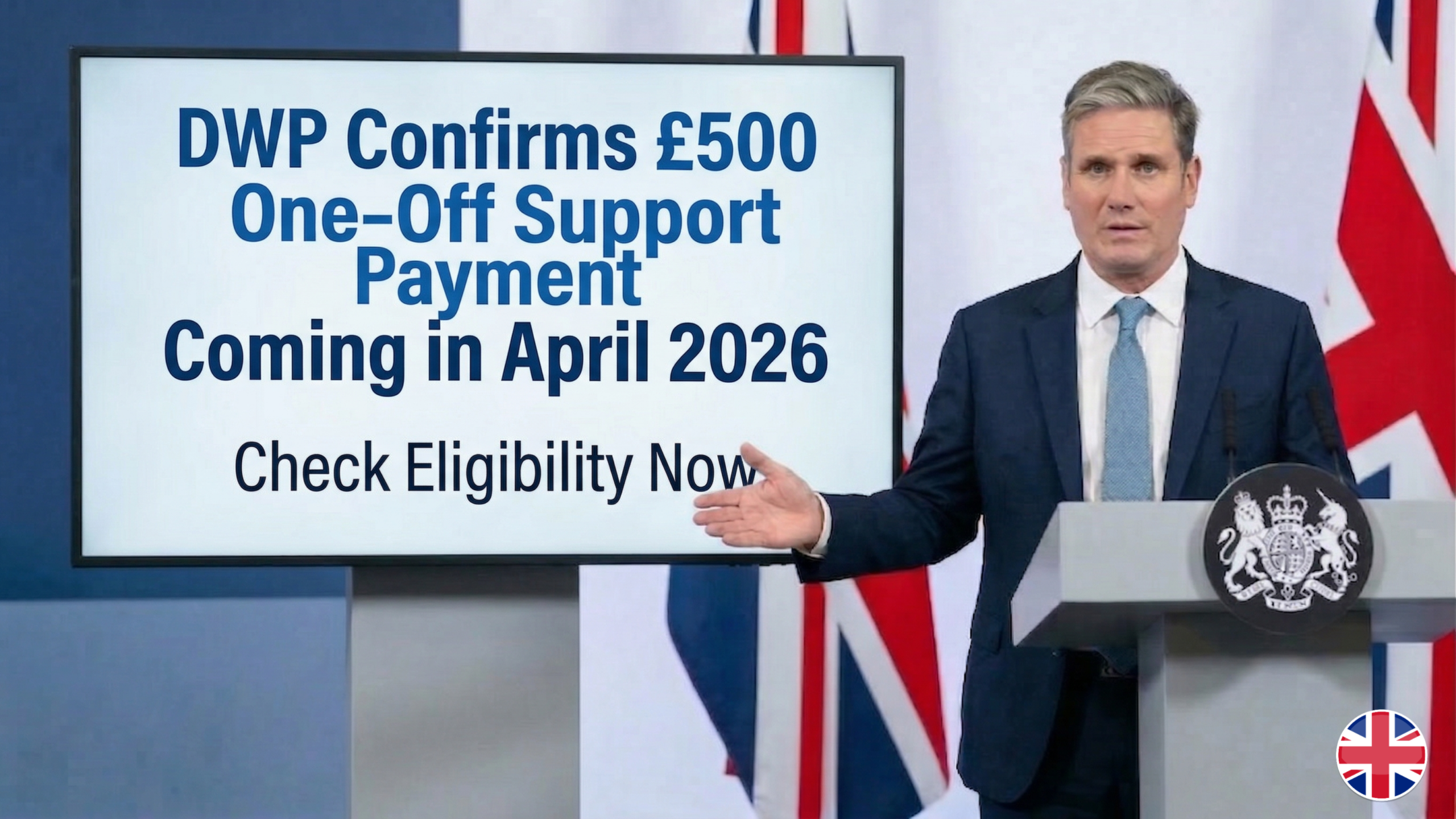
As we move into the spring of 2026, many households across the UK are looking for clarity on the latest financial support measures. With the cost of living remaining a primary concern for families, pensioners, and those on low incomes, the Department for Work and Pensions (DWP) has confirmed a significant injection of support. Central to this is the news of one-off payments and grants that could provide up to £500 in vital assistance for eligible households starting this April.
While the landscape of UK benefits is undergoing a major shift this year—including the removal of the two-child limit and a rebalancing of Universal Credit rates—the immediate focus for many is the “Act Before Late” window for the Household Support Fund and other targeted grants. Understanding how these payments work, who qualifies, and how to apply is essential for maximizing your household budget this financial year.
The Household Support Fund 2026
The backbone of this £500 support package is the newly extended Household Support Fund (HSF). Originally launched as a temporary measure, the government has confirmed its continuation through the 2025/26 financial year. This fund is not a standard benefit like Universal Credit; instead, it is a pot of money allocated by the DWP to local councils across England.
Because local authorities manage the distribution, the exact amount you receive can vary depending on where you live. However, many councils have set their maximum grant at £500 for the most vulnerable households. This money is specifically intended to help with “essentials,” which includes rising energy bills, water costs, and food. Unlike traditional benefits, this payment is usually tax-free and does not count towards the benefit cap.
Who Is Eligible for the £500 Grant
Eligibility for the 2026 support payment is broader than many people realize. While being on means-tested benefits like Universal Credit, Pension Credit, or Income Support often makes you a priority, it is not always a strict requirement. The DWP has instructed councils to identify residents who may be “just about managing” but do not qualify for other statutory support.
Key groups being targeted for the April 2026 rollout include:
-
Families with children who are eligible for Free School Meals.
-
Pensioners who are on a low income but do not receive Pension Credit.
-
Individuals with disabilities who have seen an increase in their energy usage due to medical equipment.
-
Care leavers and those transitioning into independent living.
If you are working but struggling to meet the cost of basic necessities, you are strongly encouraged to check with your local council. Many authorities use a “financial hardship” test rather than a simple “on-benefits” check.
Universal Credit Standard Allowance Uplift
In addition to the one-off grants, April 2026 marks the beginning of the “Universal Credit Rebalancing” period. Under the Universal Credit Act 2025, the standard allowance is seeing a significant above-inflation increase. For single claimants over 25, the monthly rate is set to rise to £424.90, while joint claimants where both are over 25 will see their payment increase to £666.97.
While this is a monthly increase rather than a one-off payment, the cumulative effect over the first few months of the financial year provides a similar level of “lump sum” support for those newly entering the system or transitioning from older benefits. This uplift is designed to provide a more stable floor for low-income households as other temporary cost-of-living measures are phased out.
Energy Bill Support and Reductions
For many UK residents, the most significant “payment” this April won’t arrive as cash in a bank account, but as a reduction in outgoings. The government has confirmed that from April 1, 2026, approximately £150 will be wiped off average household energy bills. This is achieved through the government part-funding the Renewables Obligation (RO) scheme, which was previously funded entirely through consumer bills.
When you combine this automatic £150 saving with a successful £350 application to the Household Support Fund, many families will reach that total £500 support threshold. It is important to note that the energy discount is automatic, but the HSF grant requires a proactive application through your local authority’s website.
Removal of the Two-Child Limit
A major policy shift taking effect in April 2026 is the removal of the two-child limit for Universal Credit and Child Tax Credit. For families with three or more children born after April 2017, this change could result in an immediate and substantial increase in their monthly award.
For a family with three children, this change could mean an additional “child element” payment of roughly £290 to £330 per month depending on the exact uprating. In the context of “one-off” support, the first payment received in April/May will act as a massive financial boost for thousands of families who have been capped for years.
How to Apply for Local Support
To access the Household Support Fund portion of the 2026 support, you must “Act Before Late.” Many councils operate on a first-come, first-served basis, and once their allocated DWP budget is spent, the applications close.
The application process usually involves:
-
Finding Your Council: Use the “Find your local council” tool on the GOV.UK website.
-
Checking the HSF Page: Look for the “Household Support Fund” or “Cost of Living” section on their site.
-
Providing Evidence: You may need to upload bank statements or energy bills to prove you are experiencing financial hardship.
-
Digital Identity: Ensure you have your National Insurance number and a form of ID ready, as many councils now use the government’s digital identity checks to speed up processing.
Pensioner Support in 2026
Pensioners are a high-priority group for the April 2026 payments. With the State Pension increasing by 4.8% due to the triple lock, the new full State Pension will reach £241.30 per week. However, for those who do not qualify for the full amount, the one-off £500 support payments from local councils are a critical safety net.
Many councils are specifically setting aside portions of their DWP funding for pensioners who are just above the threshold for Pension Credit. If you are a pensioner and your income is less than £25,000 as a couple, you should reach out to your local authority to see if you qualify for a “Winter Recovery” or “Spring Support” payment.
Disability Benefits and Additional Help
If you receive Personal Independence Payment (PIP), Disability Living Allowance (DLA), or Attendance Allowance, your benefits will also see a 3.8% increase in April 2026. While there is no specific national “disability cost of living payment” scheduled for this month, the Household Support Fund guidelines explicitly state that people with disabilities should be prioritized for local grants.
This is because the DWP recognizes that disabled individuals often face higher “unavoidable costs” related to heating, specialized diets, and transport. If you have a disability, you can often apply for the £500 support even if you have a slightly higher income than other applicants, provided you can demonstrate these higher living costs.
What to Do if Your Application Is Refused
Because the £500 support is often discretionary (meaning the council decides), some people may find their initial application refused. If this happens, do not panic. Most councils have an appeals process or a “discretionary housing payment” (DHP) scheme that can offer similar levels of support if you are at risk of rent arrears or homelessness.
Additionally, check if you are eligible for the “Healthy Start” scheme if you have young children, or the “Warm Home Discount,” which provides a separate £150 credit on electricity bills. Combining these smaller measures can often bridge the gap if the main £500 grant is unavailable in your area.
Avoiding Scams During the April Rollout
With news of “£500 payments” circulating, scammers often target vulnerable residents with fake texts and emails. It is vital to remember that the DWP and your local council will never ask for your bank details via a text message or a link in an email.
Legitimate payments from the DWP are made automatically into the account where you receive your benefits. For local council grants, you will always be asked to apply through an official “.gov.uk” website. If you receive a suspicious message asking for a “fee” to release your £500 payment, it is a scam.
Managing Your Budget for the 2026/27 Tax Year
The arrival of April support is a good time to review your overall financial health. With the National Living Wage rising to £12.71 per hour and the various benefit uplifts, the income side of the equation is changing for many. However, with inflation-linked increases affecting water bills and council tax, the “April 2026 Support” is best used as a buffer.
Financial experts suggest using any one-off grants to clear high-interest debt or to create a small emergency fund for the upcoming winter. Staying informed about these changes ensures that you don’t miss out on the money you are legally entitled to receive.
Final Thoughts on the April Support
The confirmation of the £500 support framework for April 2026 is a welcome relief for many. By combining automatic energy bill reductions, benefit uplifts, and the proactive application for local council grants, the DWP is aiming to provide a comprehensive safety net.
The most important takeaway is to take action. Check your local council’s website today, verify your eligibility for Universal Credit uplifts, and ensure your contact details are up to date with the DWP. These measures are there to help, but they often require you to take the first step.