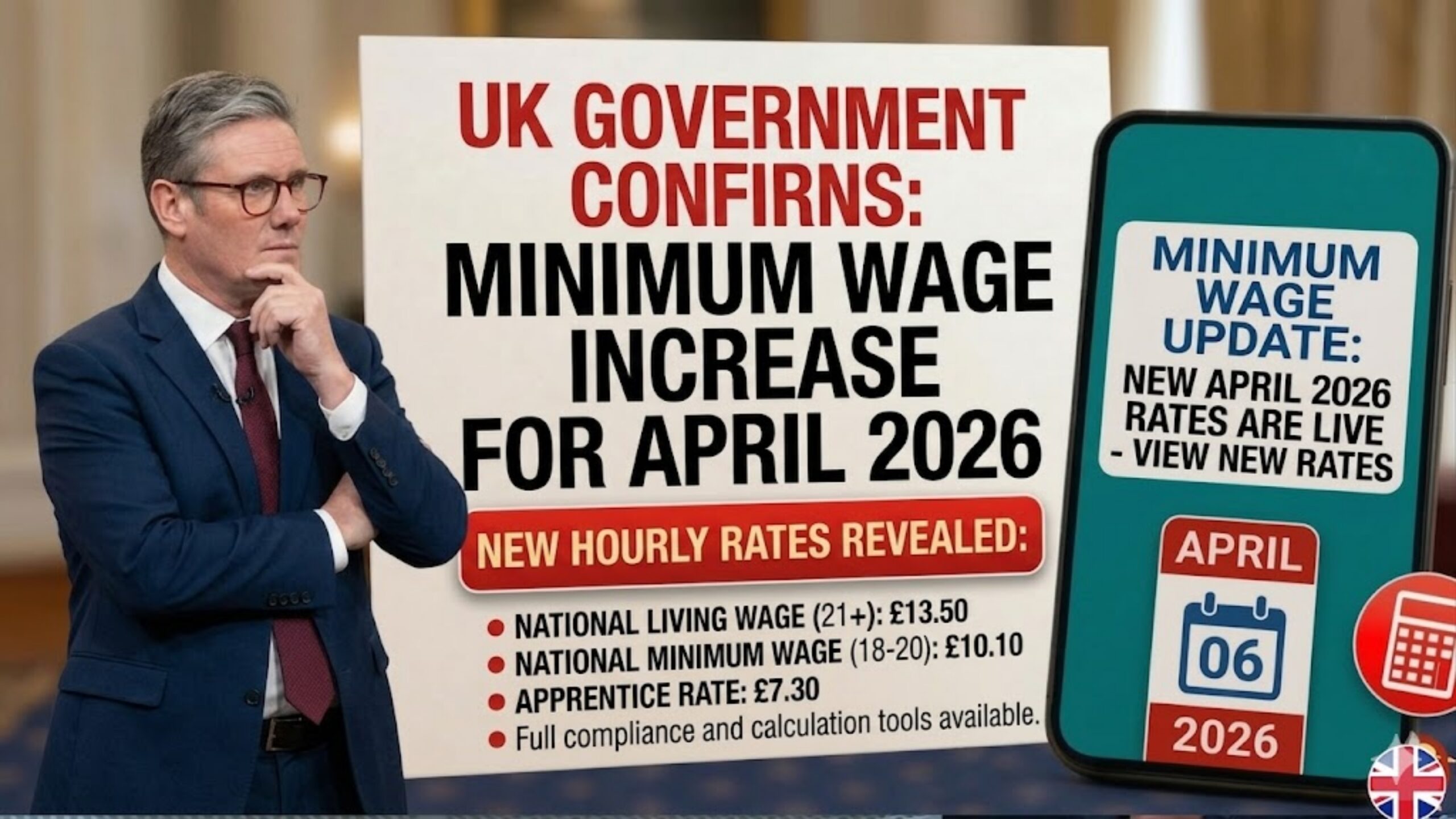
The UK government has officially confirmed the new National Minimum Wage and National Living Wage rates that will come into effect from 1 April 2026. This announcement is a pivotal moment for millions of low-paid workers across the country who are struggling to keep up with the rising cost of living. Following recommendations from the independent Low Pay Commission (LPC), the Treasury has detailed exactly how much more employees can expect to see in their pay packets this spring.
For many, this is more than just a incremental pay rise; it is a step toward the government’s long-term goal of creating a “genuine living wage” and eliminating the age-based pay discrimination that has historically seen younger workers earning significantly less for the same hours of work.
Understanding the National Living Wage Increase
The headline figure for 2026 is the increase in the National Living Wage (NLW), which applies to all workers aged 21 and over. From April 2026, the rate will rise from £12.21 to £12.71 per hour. This represents a 4.1% increase, a move designed to ensure that the lowest-paid adults in the UK continue to earn at least two-thirds of the nation’s median hourly earnings.
For a full-time worker on a standard 37.5-hour week, this 50p hourly boost translates to an extra £975 per year before tax. While business groups have expressed concerns about the cumulative impact of wage increases on small and medium-sized enterprises (SMEs), the government maintains that this is a necessary measure to support households through persistent inflationary pressures.
Significant Boost for Younger Workers
Perhaps the most striking part of the 2026 announcement is the massive jump for workers aged 18 to 20. In an effort to narrow the “youth gap,” the government has confirmed that the National Minimum Wage for this age group will rise from £10.00 to £10.85 per hour. This is an 8.5% increase, more than double the percentage increase given to those over 21.
This specific change is part of a phased plan to eventually abolish the lower age bands entirely. The government’s vision is to have a single adult rate for everyone aged 18 and over in the near future. For a 19-year-old working full-time in retail or hospitality, this pay rise will be life-changing, providing over £1,500 more in annual gross income compared to 2025.
New Rates for Under 18s and Apprentices
The youngest members of the workforce and those enrolled in recognized apprenticeship schemes are also seeing a significant uplift. Both groups will see their minimum hourly rate increase from £7.55 to £8.00. This 6% rise is intended to keep these entry-level positions attractive while ensuring that apprentices aren’t left behind as the wider economy moves toward higher pay floors.
It is important to note that if an apprentice is aged 21 or over and has completed the first year of their apprenticeship, they are entitled to the full National Living Wage of £12.71, rather than the apprentice rate. This is a common area of confusion for both employers and employees, and the 2026 guidelines reiterate the importance of making this transition as soon as the criteria are met.
The Role of the Low Pay Commission
The 2026 rates were not chosen at random. They are the result of extensive research and deliberation by the Low Pay Commission (LPC). The LPC is an independent body made up of employers, trade unions, and academic experts. Their remit for 2026 was specifically updated by the government to take the “actual cost of living” into account, rather than just looking at median wages in isolation.
The commission analyzed various economic indicators, including the Consumer Price Index (CPI), rental price growth, and energy costs. By recommending a 4.1% rise for the adult rate and an 8.5% rise for 18-20 year olds, the LPC has attempted to balance the needs of workers with the economic reality of businesses that are also facing higher overheads.
Impact on the Hospitality and Retail Sectors
While the pay rise is celebrated by workers, certain industries are feeling the pinch more than others. The hospitality, retail, and social care sectors employ the highest proportion of minimum wage staff in the UK. For a local coffee shop or a small care home, an 8.5% rise in staff costs for younger workers—combined with the 4.1% rise for adults—can significantly impact profit margins.
Many business owners are looking at ways to absorb these costs, such as increasing prices for consumers or investing in automation to improve productivity. Industry leaders have called on the government to provide more support, perhaps through business rate relief, to ensure that higher wages don’t lead to a reduction in total available hours or, in worst-case scenarios, job losses.
Managing the Effect of Fiscal Drag
One important factor that drivers of this pay rise need to consider is “fiscal drag.” Because the Personal Tax Allowance (the amount you can earn before paying income tax) remains frozen at £12,570, more of this new pay rise will be captured by the taxman. A full-time worker on the new £12.71 rate will find themselves comfortably above the tax-free threshold.
This means that while your gross pay is going up by £975 a year, your “take-home” pay won’t increase by quite that much once Income Tax and National Insurance contributions are deducted. Workers are encouraged to use updated online salary calculators to see exactly how the April 2026 changes will look on their specific payslips.
Check Your Payslip: Employer Compliance
Failing to pay the National Minimum Wage is a criminal offense in the UK. HMRC is the body responsible for enforcing these rules, and they have the power to fine employers up to 200% of the unpaid wages (capped at £20,000 per worker). Despite this, every year thousands of workers are underpaid, often due to “technical” errors like not paying for time spent cleaning up after a shift or deducting money for uniforms that takes the hourly rate below the legal minimum.
If you are a worker, you should check your payslip for the first full pay period following 1 April 2026. If your rate hasn’t been updated to £12.71 (for 21+) or £10.85 (for 18-20), you should speak to your manager or contact ACAS for free, confidential advice.
National Living Wage vs. Real Living Wage
It is easy to get confused between the government’s “National Living Wage” and the “Real Living Wage” set by the Living Wage Foundation. The National Living Wage is the legal minimum set by the government. The Real Living Wage is a voluntary rate that over 15,000 UK employers choose to pay because it is calculated based on what people actually need to survive.
From April 2026, the Real Living Wage is expected to rise to £13.45 across the UK and £14.80 in London. While the government’s increase to £12.71 is a positive step, it still sits below what independent charities suggest is necessary for a truly decent standard of living, especially in high-cost areas like the Southeast.
Preparing for the April Transition
As we approach the April 1st deadline, both employers and employees need to be ready. For employees, it’s a good time to review your household budget and see how the extra income can be best utilized—perhaps by paying down high-interest debt or increasing pension contributions.
For employers, the focus should be on updating payroll software and communicating clearly with staff. Transparency is key; letting your team know that you are aware of the new rates and that their pay will be adjusted accordingly builds trust and prevents HR headaches later in the month.
Looking Ahead to 2027
The 2026 increases are a clear signal of the government’s intent. By giving younger workers a much larger percentage increase, the path is being cleared for a unified adult wage. Experts predict that by April 2027 or 2028, we could see the 18-20 age bracket merged entirely with the 21+ bracket.
The UK’s minimum wage remains one of the highest in the developed world when compared to median earnings. While this presents challenges for some businesses, the overarching goal is to ensure that work always pays and that the lowest-earning members of society are shielded from the harshest effects of economic volatility.
Final Summary of the 2026 Rates
To recap, here are the confirmed hourly rates starting from 1 April 2026:
-
National Living Wage (Aged 21 and over): £12.71
-
National Minimum Wage (Aged 18 to 20): £10.85
-
National Minimum Wage (Aged 16 to 17): £8.00
-
Apprentice Rate: £8.00
-
Accommodation Offset: £11.10 per day
Stay informed and ensure you are receiving what you are legally entitled to. The April 2026 changes are a significant milestone in UK employment law, reflecting a changing economy and a renewed focus on worker dignity and fair pay.